Brass hand-held coin fare box that was used on the Toronto Railway Company which had a single track with open cars back in 1914. This coin fare box is handheld and was used to collect passenger’s fares by a conductor on a streetcar. The design is characteristic of those manufactured by companies like the Johnson Fare Box Company, which was a prominent supplier in North America.
Very cool and harder to find farebox in outstanding shape. Same box is on Ebay of January 2026 and selling for $500+.
Key Details
Function: Conductors would carry these to collect fares (coins and tokens) from passengers on public transit vehicles like trolleys and buses. The coins would fall through a visible chute system, often making a distinctive sound that the operator would listen for to ensure the correct fare was paid.
Materials: These boxes were typically constructed with materials like brass, metal, and glass. The side panels often had a leather or imitation leather finish.
Historical Context: The use of these handheld boxes became widespread with the "Pay As You Enter" system, which aimed to reduce fare evasion (known as "knocking down") when compared to conductors manually collecting fares while walking through a moving car.
Markings: The specific box in the image has a number on the side (0-8 visible) and might have manufacturer or patent information stamped on the metal components, such as "T. Ry. Co" or a patent date like 1914.
No Key
Brass hand-held coin fare box that was used on the Toronto Railway Company which had a single track with open cars back in 1914. This coin fare box is handheld and was used to collect passenger’s fares by a conductor on a streetcar. The design is characteristic of those manufactured by companies like the Johnson Fare Box Company, which was a prominent supplier in North America.
Very cool and harder to find farebox in outstanding shape. Same box is on Ebay of January 2026 and selling for $500+.
Key Details
Function: Conductors would carry these to collect fares (coins and tokens) from passengers on public transit vehicles like trolleys and buses. The coins would fall through a visible chute system, often making a distinctive sound that the operator would listen for to ensure the correct fare was paid.
Materials: These boxes were typically constructed with materials like brass, metal, and glass. The side panels often had a leather or imitation leather finish.
Historical Context: The use of these handheld boxes became widespread with the "Pay As You Enter" system, which aimed to reduce fare evasion (known as "knocking down") when compared to conductors manually collecting fares while walking through a moving car.
Markings: The specific box in the image has a number on the side (0-8 visible) and might have manufacturer or patent information stamped on the metal components, such as "T. Ry. Co" or a patent date like 1914.
No Key

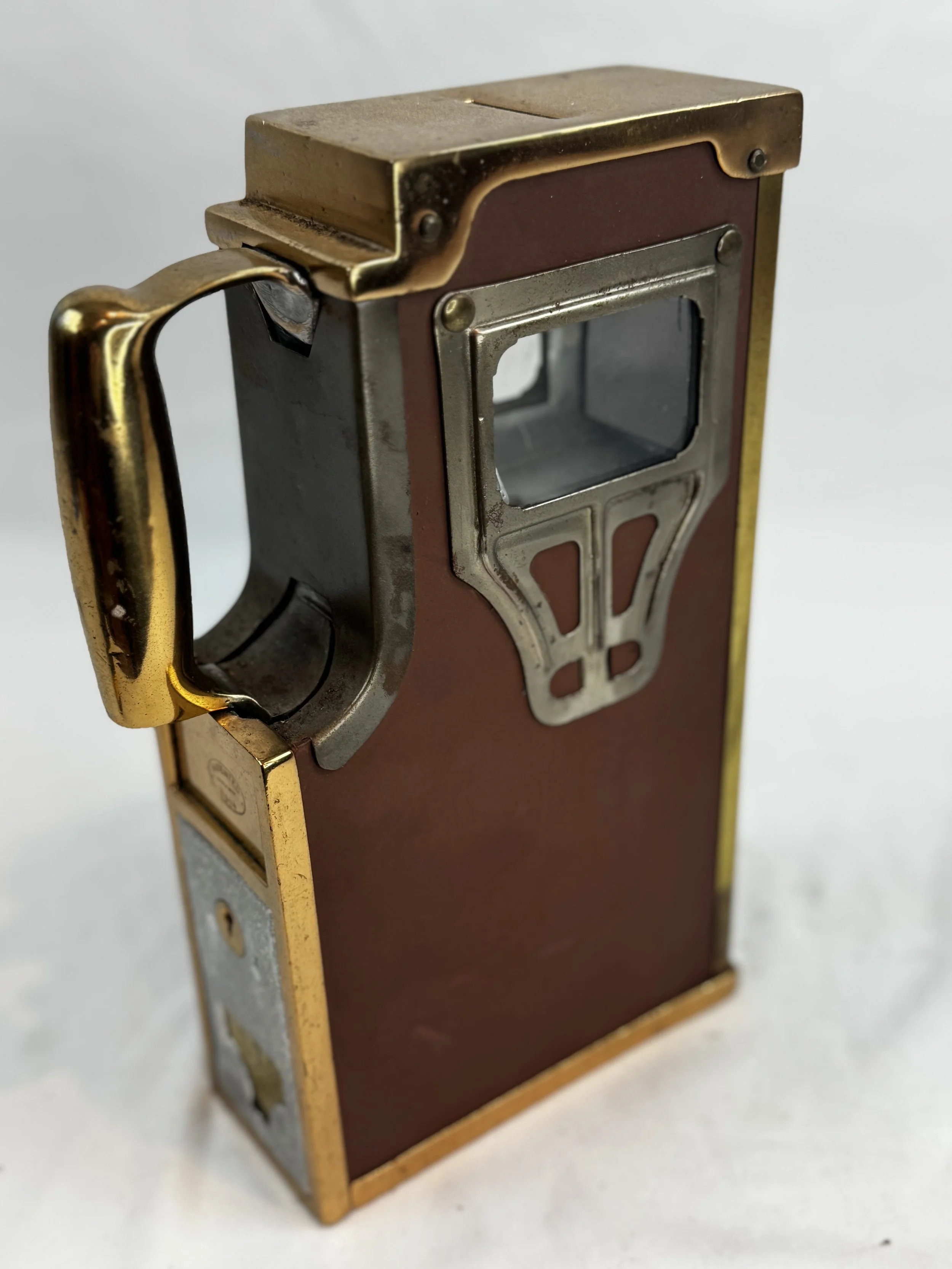 Image 1 of 7
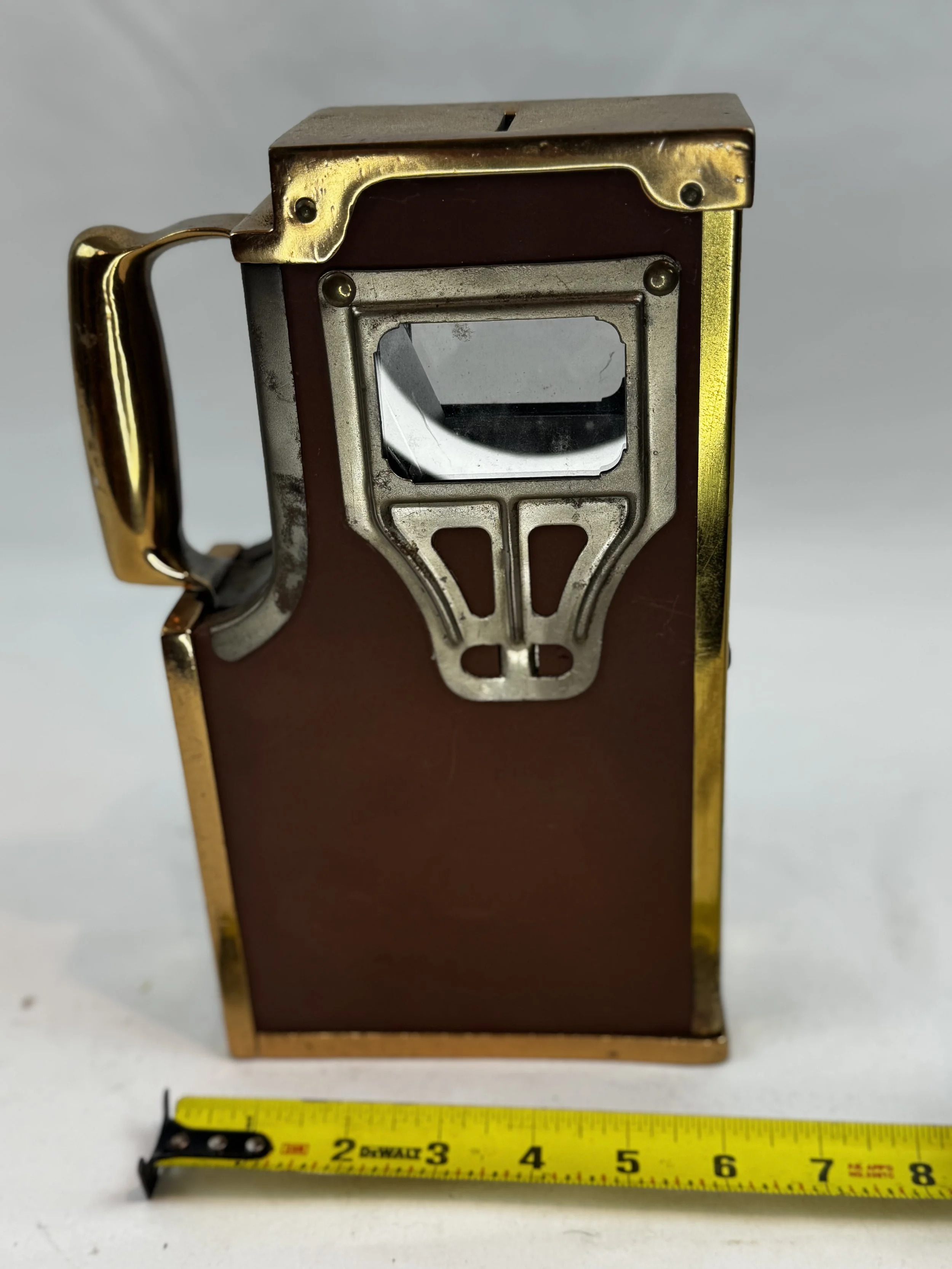 Image 2 of 7
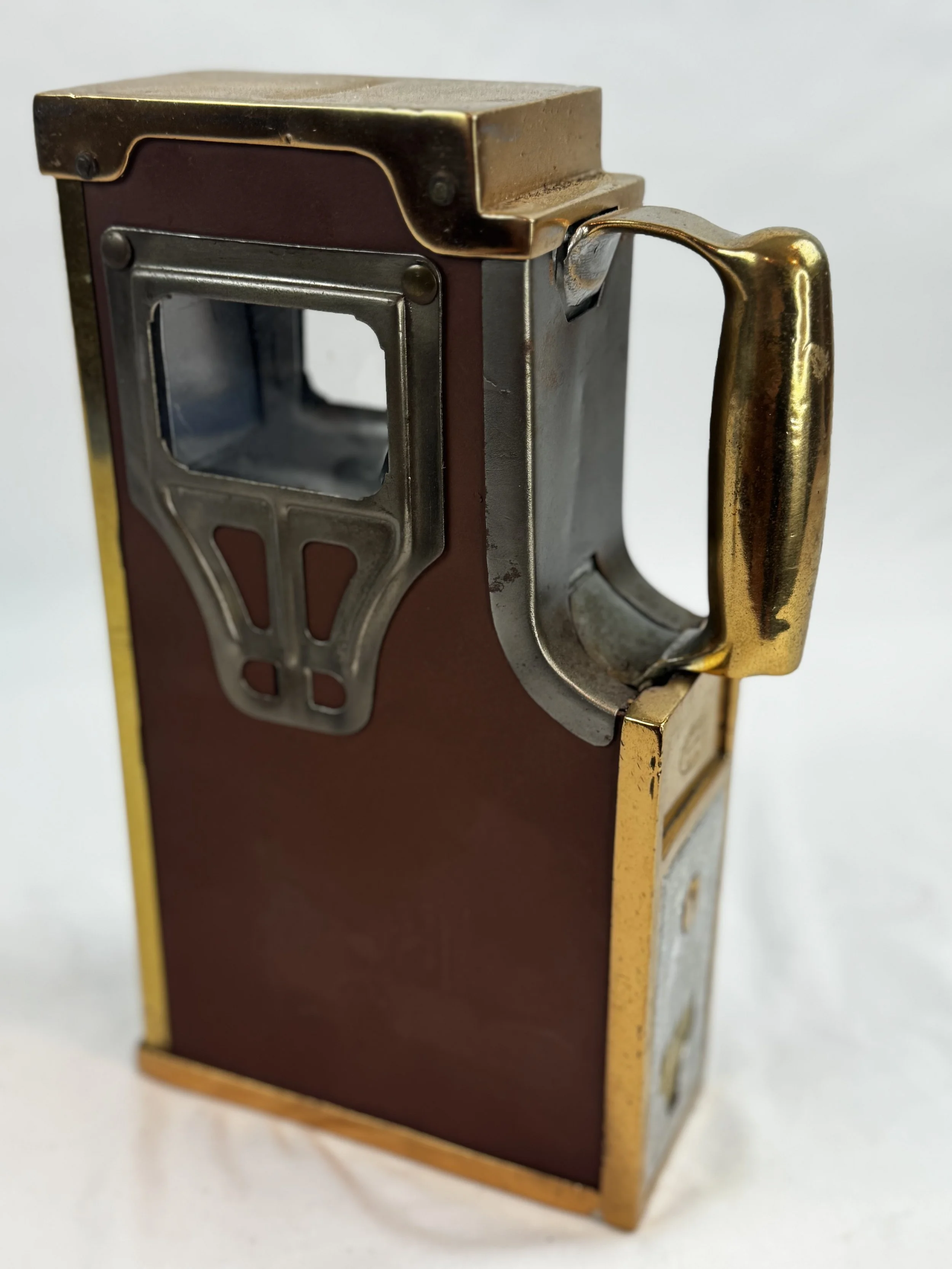 Image 3 of 7
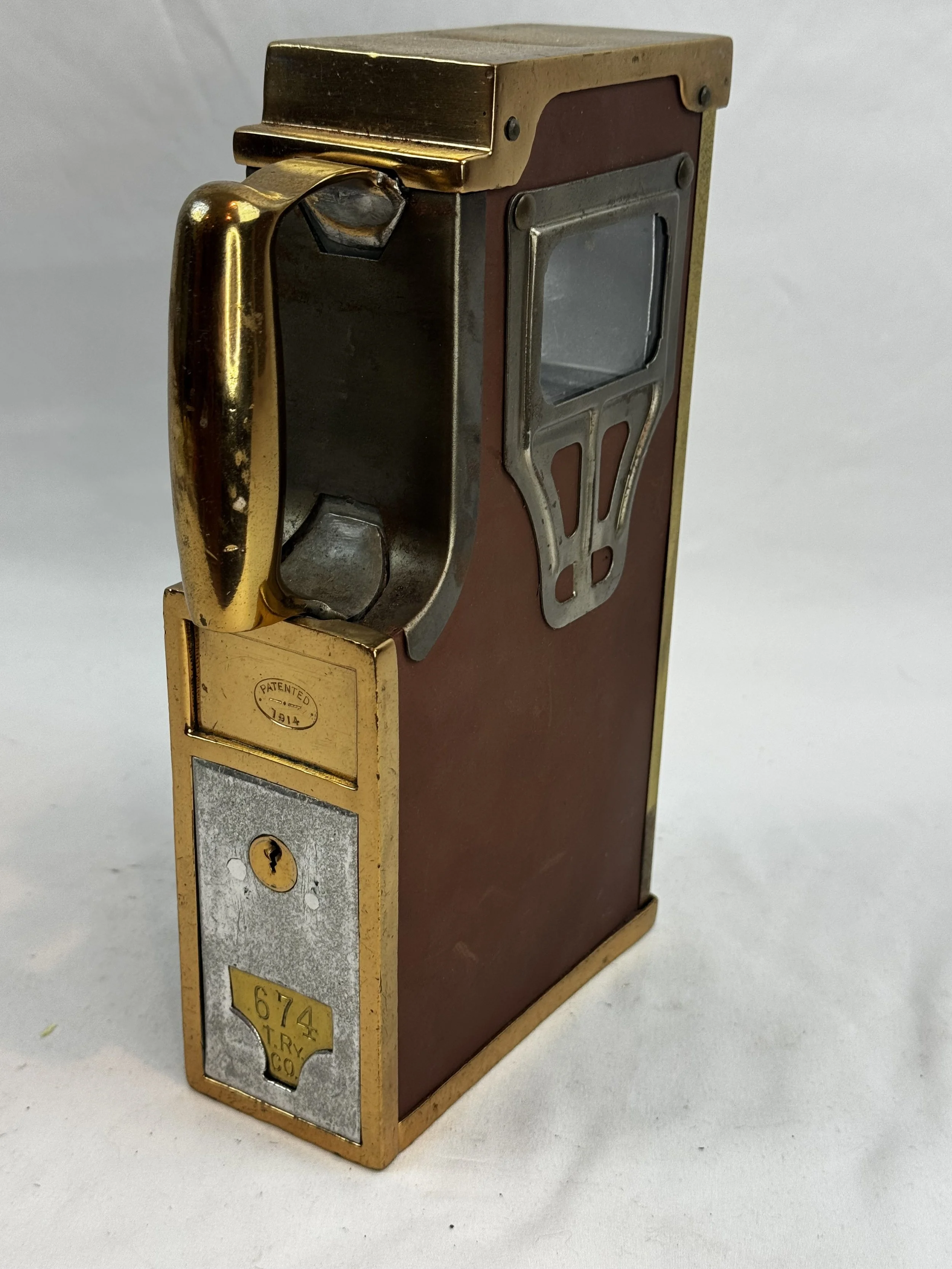 Image 4 of 7
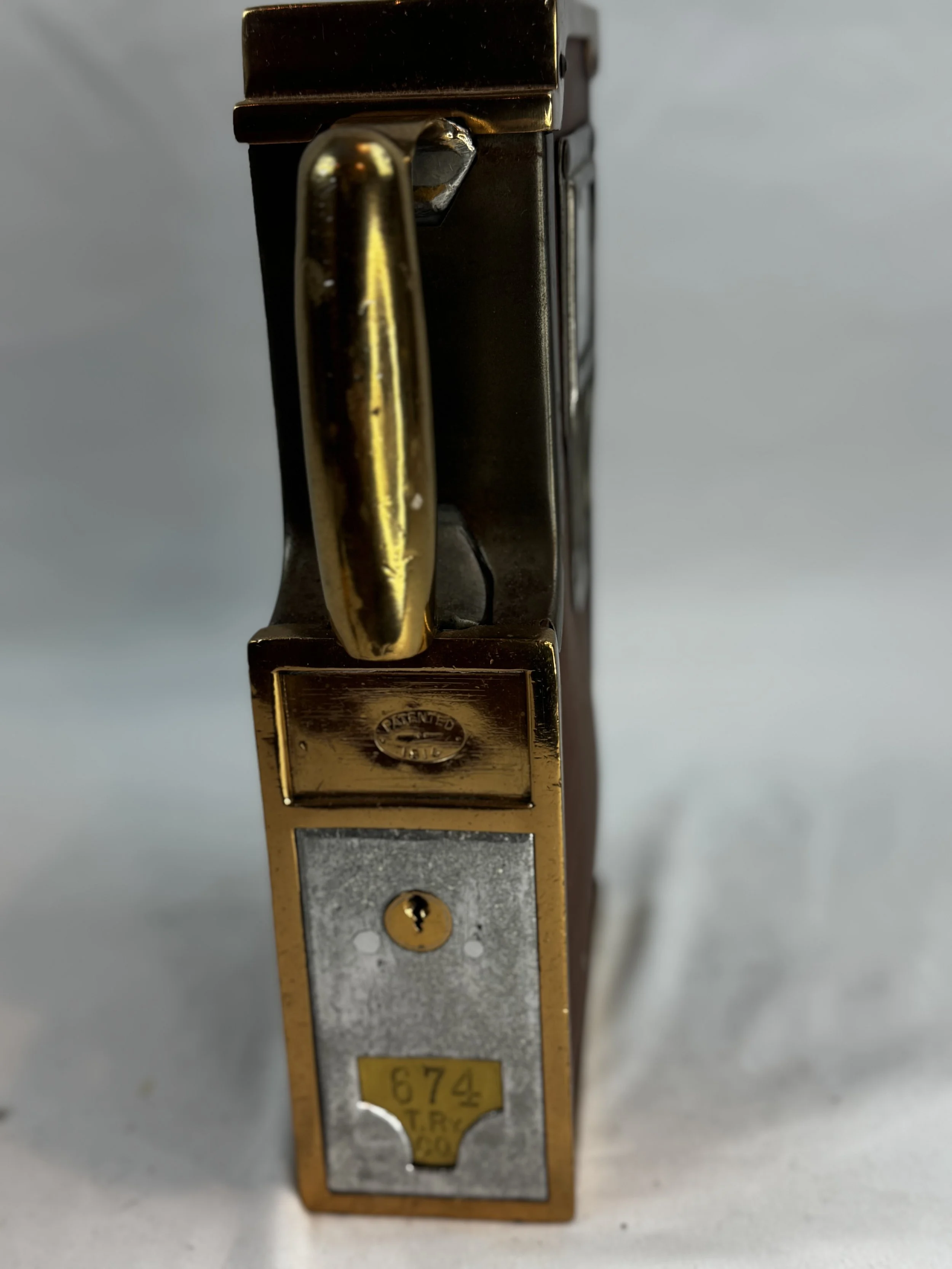 Image 5 of 7
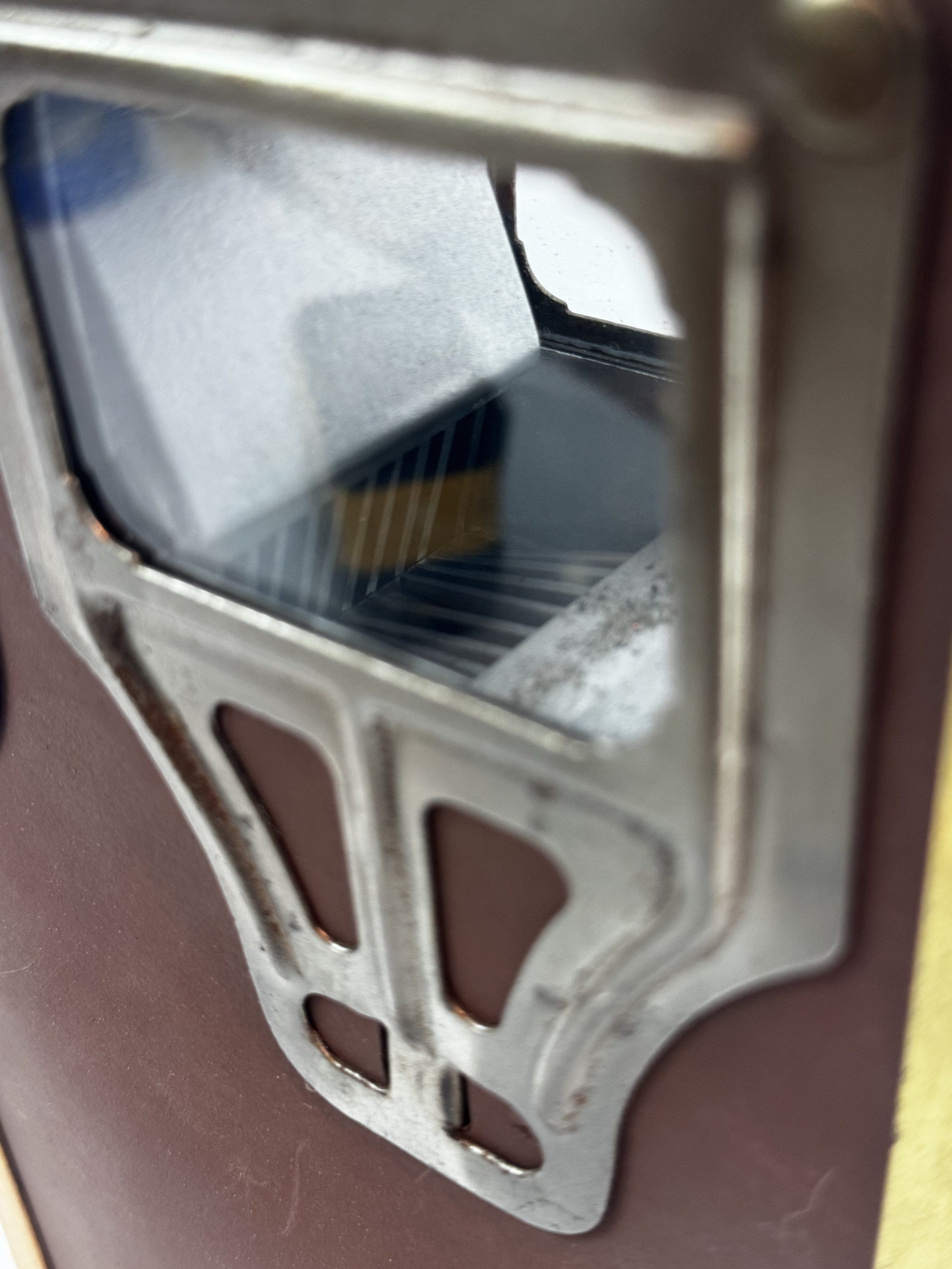 Image 6 of 7
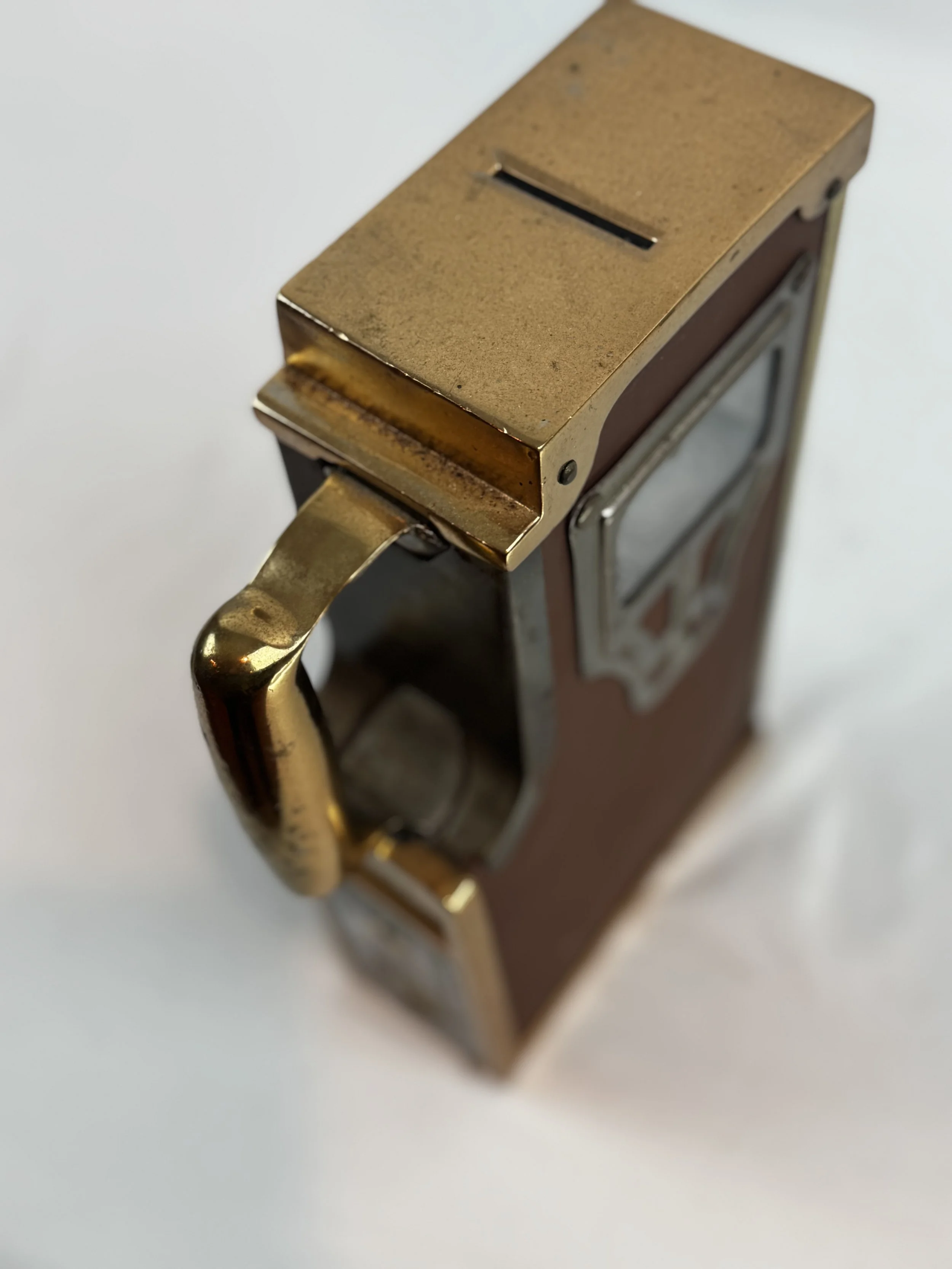 Image 7 of 7